
India has a lot of different reptiles, and snakes are some of the most interesting ones. These hard-to-find animals can live in almost any kind of environment in the country, from thick rainforests and dry scrublands to rich farmlands and the edges of villages. Most species are not dangerous and stay away from people, but some are important for health reasons.
People who aren’t interested in wildlife should learn about venomous snakes in India. It is important for people who travel, take pictures, live in rural areas, and like being outside. Having the right information can help stop panic, lower conflict, and, most importantly, save lives.
The Big Four are the four types of snakes that cause the most serious snakebite cases in India. This guide talks about them. You will learn how to spot them, where to find them, how they behave, and what to do if you see one.
Let’s look into the world of India’s most misunderstood predators.

Why the Difference Between Venomous and Non-Venomous Snakes Is Important
There are almost 300 different kinds of snakes in India, but only a few of them are dangerous to people. But fear often makes people think all snakes are bad. Because of this confusion, people kill harmless species that play important roles in the ecosystem for no reason.
If a snake can use special fangs to deliver toxins, it is venomous. These dangerous chemicals can affect the nervous system, the blood, the tissues, or a combination of all three. The strength of the venom, how much is injected, and how quickly medical help arrives all play a role in how bad the situation is.
It’s even harder to tell them apart because many harmless species copy the colors or behaviors of dangerous ones. Unless you know how to handle snakes, it’s best to stay away from them.
What Makes Some Venomous Snakes in India So Deadly?
When people talk about snakes that are important in medicine, they usually talk about three main types of venom:
Neurotoxic venom affects the nervous system and can make it hard to breathe or even paralyze you.
Hemotoxic venom affects the body’s ability to clot blood and its internal organs.
Cytotoxic venom hurts tissues, which makes them swell and die.
Some snakes have a mix of these effects, which can make it hard to treat them.
The four types of animals listed below are responsible for most of the bites that have been reported. They are also common and often live near where people do. One of the main reasons people see them so often is that they can change.
The Big Four: The Most Dangerous Snakes in India
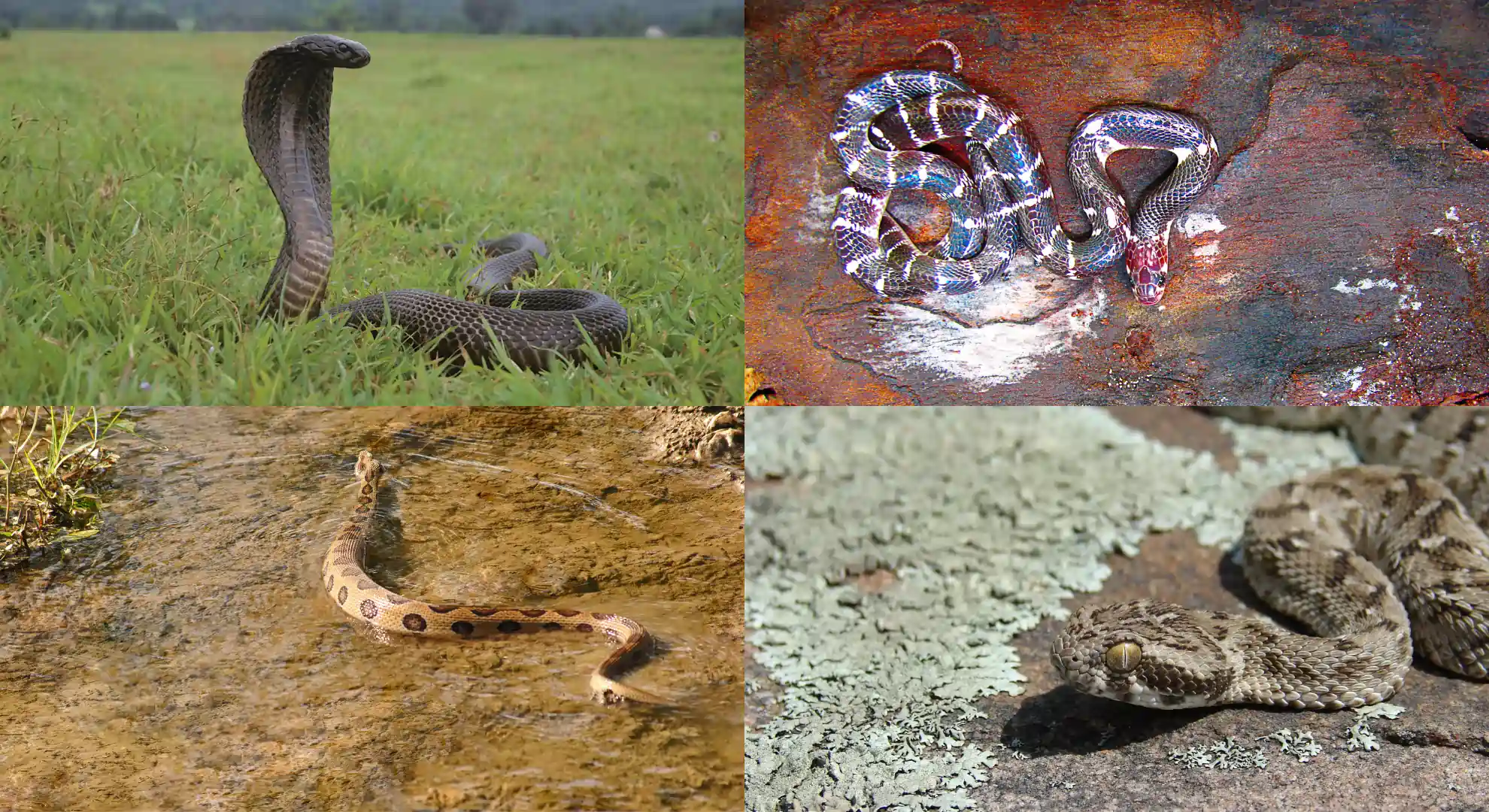
1) Indian Cobra (Naja naja)
The Indian cobra is one of the most well-known poisonous snakes in India. It is easy to spot and has a strong presence in folklore, religion, and traditional art.

Recognizing
People know the cobra for its hood, which it spreads out when it feels threatened. A lot of people have a mark on the back of their hood that looks like a pair of glasses, but the patterns can be different. Most adults are between 4 and 6 feet long.
Habitat and Distribution
Cobras from India can change a lot. You can find them in forests, fields, wetlands, and near where people live. Rodents like to hang out in barns and places where grain is kept.
Their Behaviour
Cobras are known for being dangerous, but they would rather run away than fight. Hood spreading and hissing are ways to scare off possible threats. Bites usually happen when a snake is disturbed or stepped on by accident.
Type of Venom
Their venom is primarily neurotoxins, which mostly affect the nervous system, which makes it hard to breathe and control muscles. Antivenom and medical care right away are very important.
Role in the environment
Cobras help keep rodent populations in check, which is good for farming and stops diseases from spreading.
2) The Common Krait (Bungarus caeruleus)
The common krait is quiet, secretive, and very strong. It bites a lot of people every year. It is very dangerous because of how it acts at night.

Identification
They are usually shiny black or dark blue with thin white stripes, but some people may look almost solid. Kraits are long, thin snakes that can grow to be 5 feet long.
Where they live and where they are found
They are common in the Indian subcontinent and often come into villages looking for food, just like rats and other snakes.
Their Behaviour
Most of the time, kraits are active at night. During the day, they stay out of sight in rubble, burrows, or buildings. Victims may not know they have been bitten because bites often happen when people roll over on them while they are sleeping.
Type of Venom
Highly neurotoxic. Bad for the nervous system in a big way. It might take a while for symptoms to show up, but respiratory paralysis can happen quickly. It’s very important to get to the hospital quickly.
Why Encounters Are Serious
Their bite doesn’t hurt, and they take a long time to react, which makes people think they aren’t as dangerous as they are.
3) Russell’s Viper (Daboia russelii)
Russell’s viper is one of the most feared poisonous snakes in India because it is strong and stout, and its venom is hard to understand.

Identification
It has a strong body with three lines of dark oval or chain-like spots running along it. The head is shaped like a triangle, and the hissing sound is loud and never stops.
Where they live and their distribution
You can often find them in farmlands, open grasslands, scrub areas, and sometimes even on the edges of cities. They like places with a lot of rodents, which brings them close to people.
Their Behaviour
Russell’s vipers wrap themselves up tightly, hiss loudly, and can strike very quickly when they feel threatened. A lot of bites happen while farming.
Type of Venom
Primarily hemotoxic but with additional systemic effects. It mostly affects the blood, but it also has other effects on the body. It can cause a lot of pain, swelling, kidney problems, and blood clotting problems.
Medical Importance
Because of the wide distribution and frequency of encounters, this species contributes significantly to snakebite statistics.
4) The Saw-Scaled Viper (Echis carinatus)
This viper is small but very aggressive, which shows that danger isn’t measured by how long it is.

Identification
They usually range in length from 1 to 3 feet and have rough, raised scales with zigzag or patchy patterns. When it feels threatened, it rubs its scales together, which makes a unique sizzling sound.
Where they live and their distribution
Found a lot in dry places, rocky areas, scrubby lands, and deserts. You can also find it near small towns.
Their Behaviour
Quick to get angry and protective. Because it can blend in, people often run into each other by accident, especially at night.
Type of Venom
Hemotoxic, which means it can cause bleeding problems and damage tissues.
Why It’s Notorious
It may be small, but it bites a lot because it is so common and how it acts.
In India, where do venomous snakes live the most?
These snakes do well in a variety of settings:
- Areas of farming where there are a lot of mice
- Places where people live and areas on the edge of the village
- Edges of forests and scrublands
- Places with trash, stacks of firewood, or building materials
There is usually more activity during the monsoon months because burrows flood and prey move around.

To reduce conflict, it’s important to understand how habitats overlap.
What To Do If You Encounter a Venomous Snake
The most important rule is simple: give it space.
Snakes don’t chase after people. When they feel trapped or in danger, they act defensively. If you see one:
Stop everything right now.
Stay far away.
Let the snake get away.
Don’t move quickly or try to take pictures from a short distance.
If it’s inside a building, call trained wildlife rescuers.
People get bitten mostly when they try to catch or kill a snake.
First Aid: What to Do if a Snake Bites You
People know this, but accidents can still happen. Having the right answer greatly increases your chances of living.

Do these things:
- Stay calm with the hurt person. Venom spreads faster when people are scared.
- Don’t move the hurt limb.
- Take off any tight clothes or jewelry that are close to where you were bitten.
- Take the patient to the nearest hospital right away.
- Stay Away from These Dangerous Myths
- Don’t suck on or cut the wound.
- Don’t use ice or any chemicals.
- Don’t use tourniquets.
- Don’t rely on old-fashioned ways to get better.
- Only antivenom given in a hospital can properly treat bites.
Why Snakes Are Important to India’s Ecosystem
Even the most dangerous poisonous snakes in India are important for keeping the environment in balance.
They keep the number of rodents in check, protect crops, and help keep food webs healthy. Taking them away can lead to pest problems and losses in farming.
Snake venom has also led to the creation of life-saving drugs, like those used to treat high blood pressure and blood clotting problems.
It’s not enough to just like snakes; you have to understand how important they are.
How to Stay Safe in Snake-Infested Areas
Taking a few simple steps can greatly lower the risk:
When you walk at night, use a flashlight.
When you’re outside, wear shoes that are strong.
Don’t put your hands in holes or under rocks.
To keep rodents away, keep your space clean.
In country homes, make sure the doors and screens are in the right places.
People and snakes will get along better in the future by learning and living together.
Conclusion
Snakes are a big part of India’s landscapes. Some species are very dangerous, but most would rather get away without being seen.
Learning about poisonous snakes in India can help you replace your irrational fear with smart caution. It helps people act properly in emergencies, encourages respect, and helps protect the environment.
Remember that snakes are not the bad guys in the jungle the next time you think about them. They are important parts of nature’s complicated web.
Also read: Turtles and Tortoises of Kaziranga Tiger Reserve & Five Best Safari Experiences in South India